Our use of cookies

We use necessary cookies to make our website work. We’d also like to use analytics and functional cookies which help us make improvements to the website by measuring how you use it, and to enable our website to offer you additional functionality.

More information on how we use cookies can be found in our cookie policy.

Bringing History to Life: How Immersive Projection Mapping Transforms Korea’s Independence Hall

Bringing History to Life: How Immersive Projection Mapping Transforms Korea’s Independence Hall

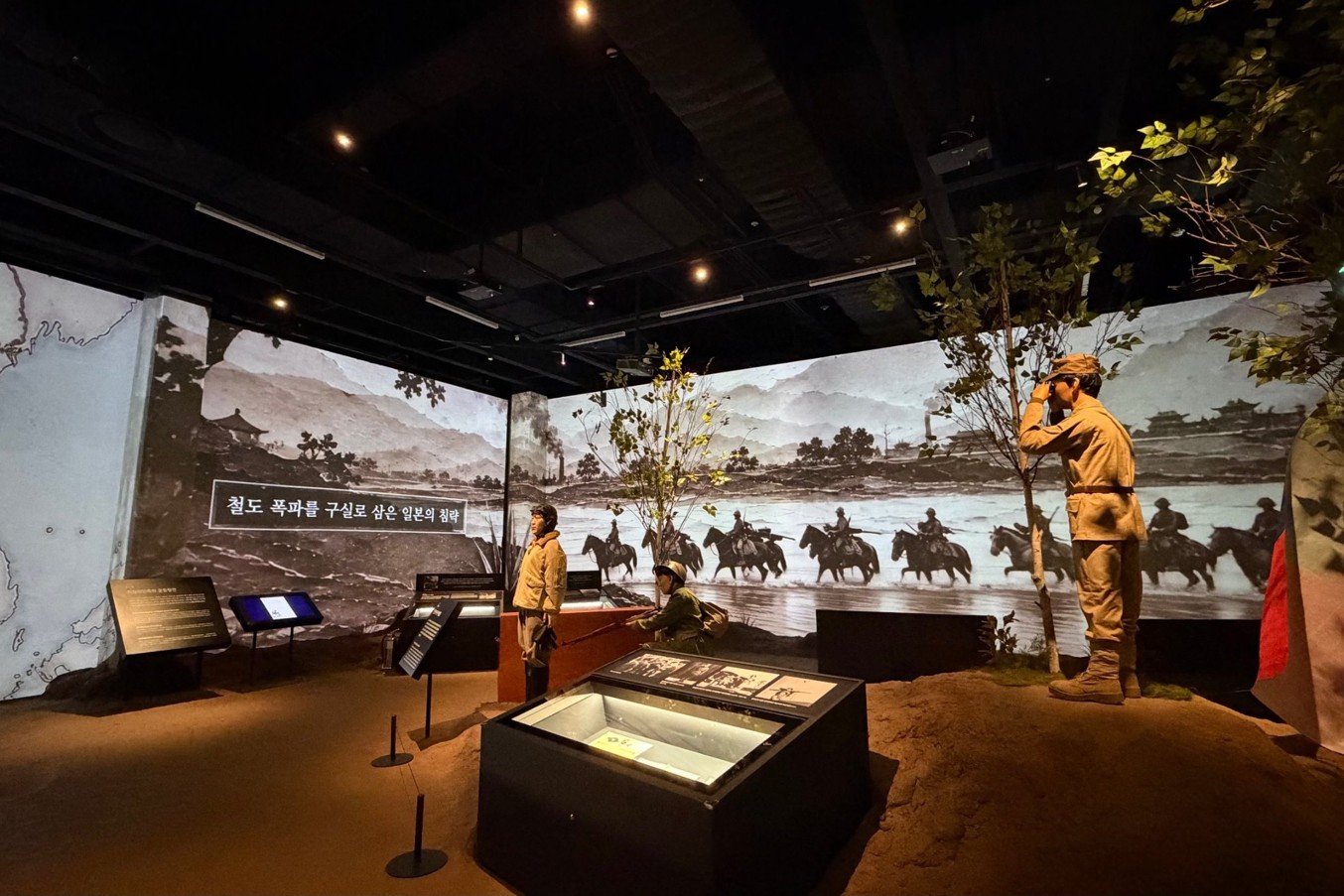
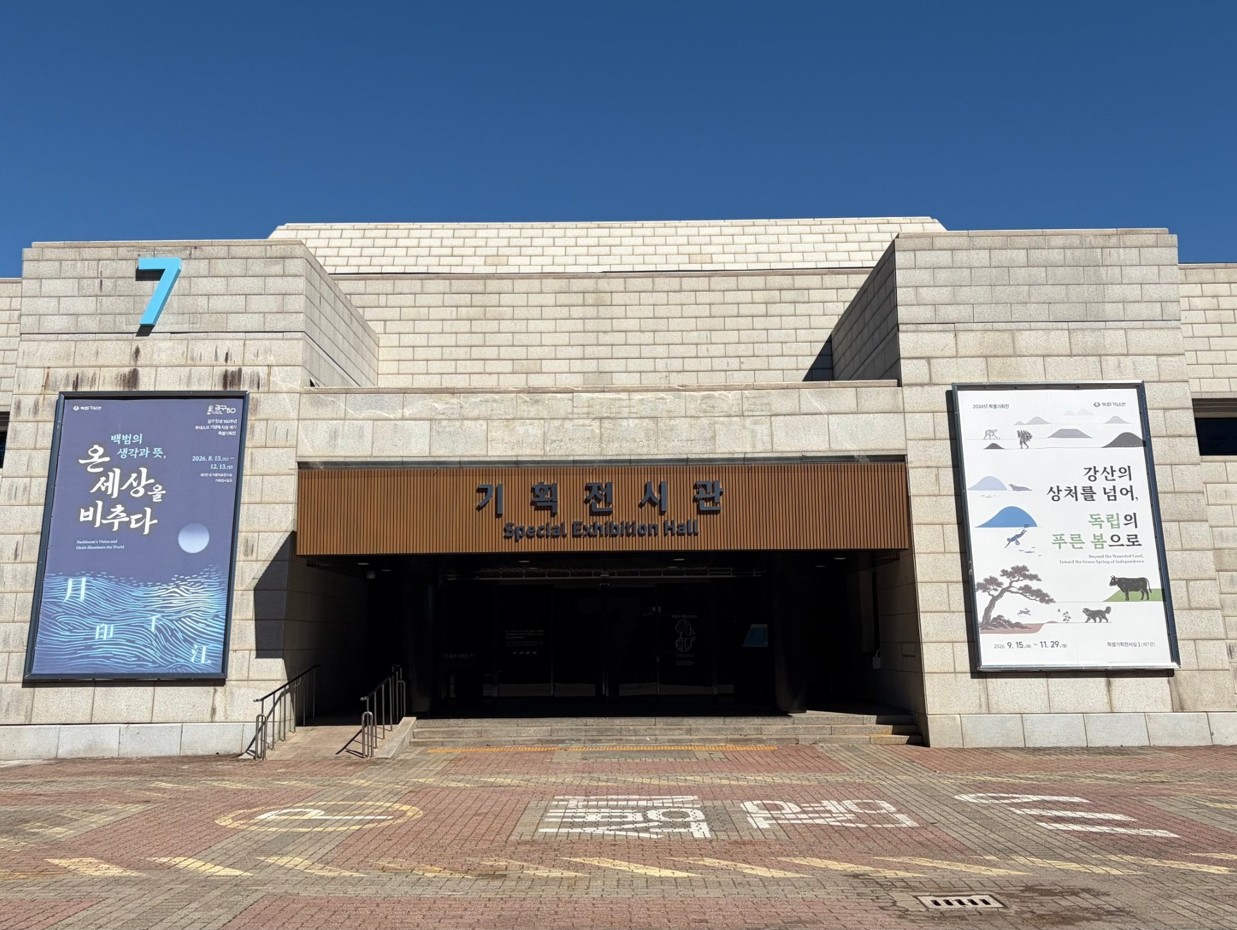
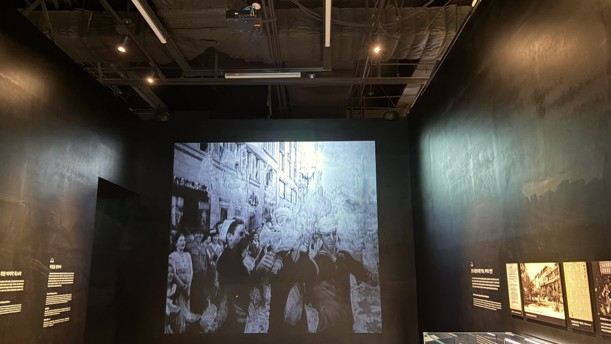
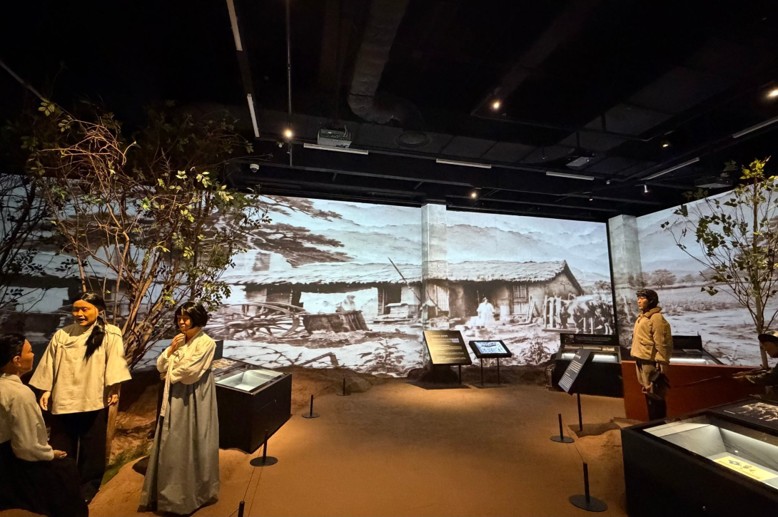
The Independence Hall of Korea unveiled its special exhibition, "Korean Independence Movement Together with the World," at the 7th Exhibition Hall. The venue deployed 22 Optoma GKU-DBTST short-throw laser projectors featuring 0.58:1 short-throw lenses, edge blending, and projection mapping. This setup creates an expansive, multi-channel immersive visual environment across complex exhibition layouts, bringing archival documents and international solidarity during the independence movement to life.
Client
Corporate Name
Independence Hall of Korea
Corporate Introduction
Located in Cheonan, Chungcheongnam-do, the Independence Hall of Korea is a prominent national historical museum dedicated to preserving the history of Korea’s independence movement and educating the public. The venue welcomes approximately 1.8 million visitors annually (1,799,000 visitors in 2025). The 7th Exhibition Hall (Special Exhibition Hall) is a versatile, multi-purpose space dedicated to themed exhibitions, donated historical archives, and interactive digital experiences. On August 15, 2026—celebrated nationwide as National Liberation Day—the hall inaugurated the exhibition titled "Korean Independence Movement Together with the World." The exhibition illuminates Korea’s independence movement through the lens of international solidarity, illustrating joint anti-imperialist resistance across the globe.
Challenge

[Multi-Zone Immersive Space & Diverse Historical Media]

The 7th Exhibition Hall integrates special exhibitions, donated physical archives, and interactive educational stations. Each dedicated zone required its own large-scale visual environment. Content formats spanned high-resolution vintage photographs, archival black-and-white documentary films, animated maps, explanatory typography, and modern illustrations. The projection system required high contrast and crisp resolution to render fine document text legible while delivering vivid, large-scale historical panoramic backdrops.


[Complex Architectural Constraints & Visitor Clearance]

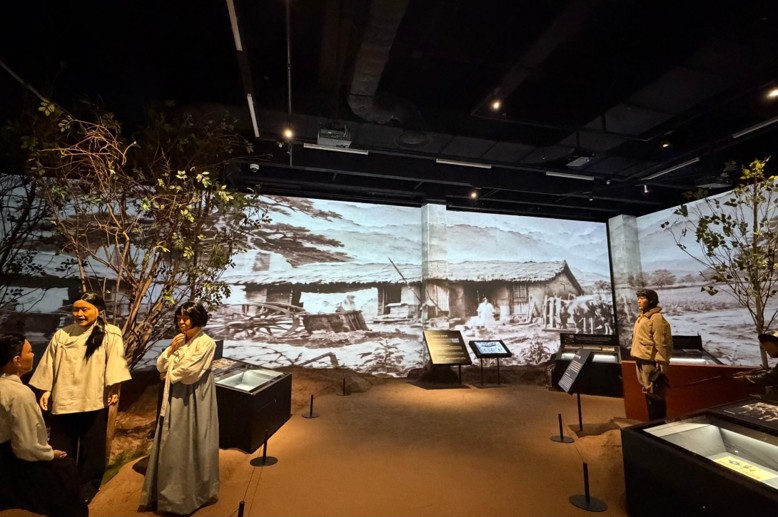
The exhibition hall features intricate partition walls, acute corners, and exposed utility ceilings, severely restricting conventional throw distances. Furthermore, with historical wax figures, physical showcases, and high visitor traffic, the projection beams had to be positioned carefully to avoid casting spectator shadows or interfering with structural exhibits.


[Beyond Single-Screen Projection: Multi-Surface Blending & Mapping]

To provide visitors with a panoramic journey into history, exhibition designers moved away from traditional single-screen displays. The layout demanded panoramic multi-wall projections, edge-blended continuous murals, and projection mapping wrapped around room perimeters. This setup necessitated uniform brightness, consistent color balance, and flexible geometric correction across multiple units.

Solution

[22 x Optoma GKU-DBTST: 6,500 Lumens DuraCore Laser Reliability]

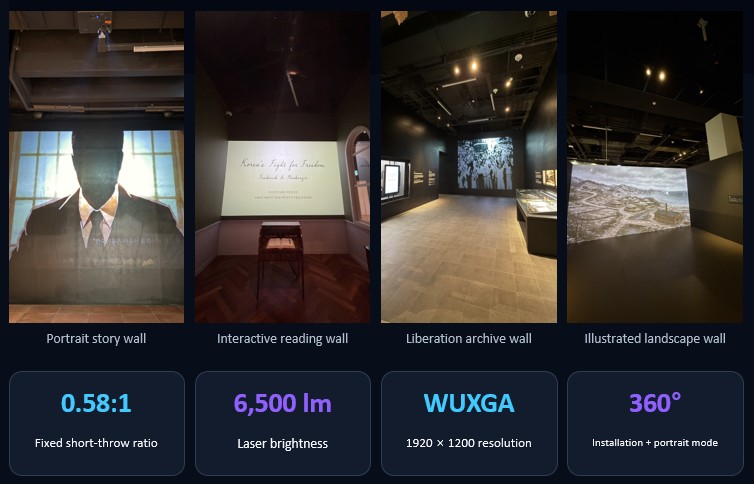
The venue integrated 22 units of Optoma GKU-DBTST high-brightness laser projectors. Powered by Optoma's DuraCore laser light engine, each projector delivers 6,500 lumens of brightness, native WUXGA (1920 × 1200) resolution, and an ultra-high 300,000:1 dynamic contrast ratio. With an IP6X-rated sealed optical engine and up to 30,000 hours of laser lifespan in Eco mode, the system guarantees long-term color fidelity and virtually maintenance-free 24/7 reliability for a high-traffic national museum.


 [0.58:1 Fixed Short-Throw Lens for Tight Spaces]

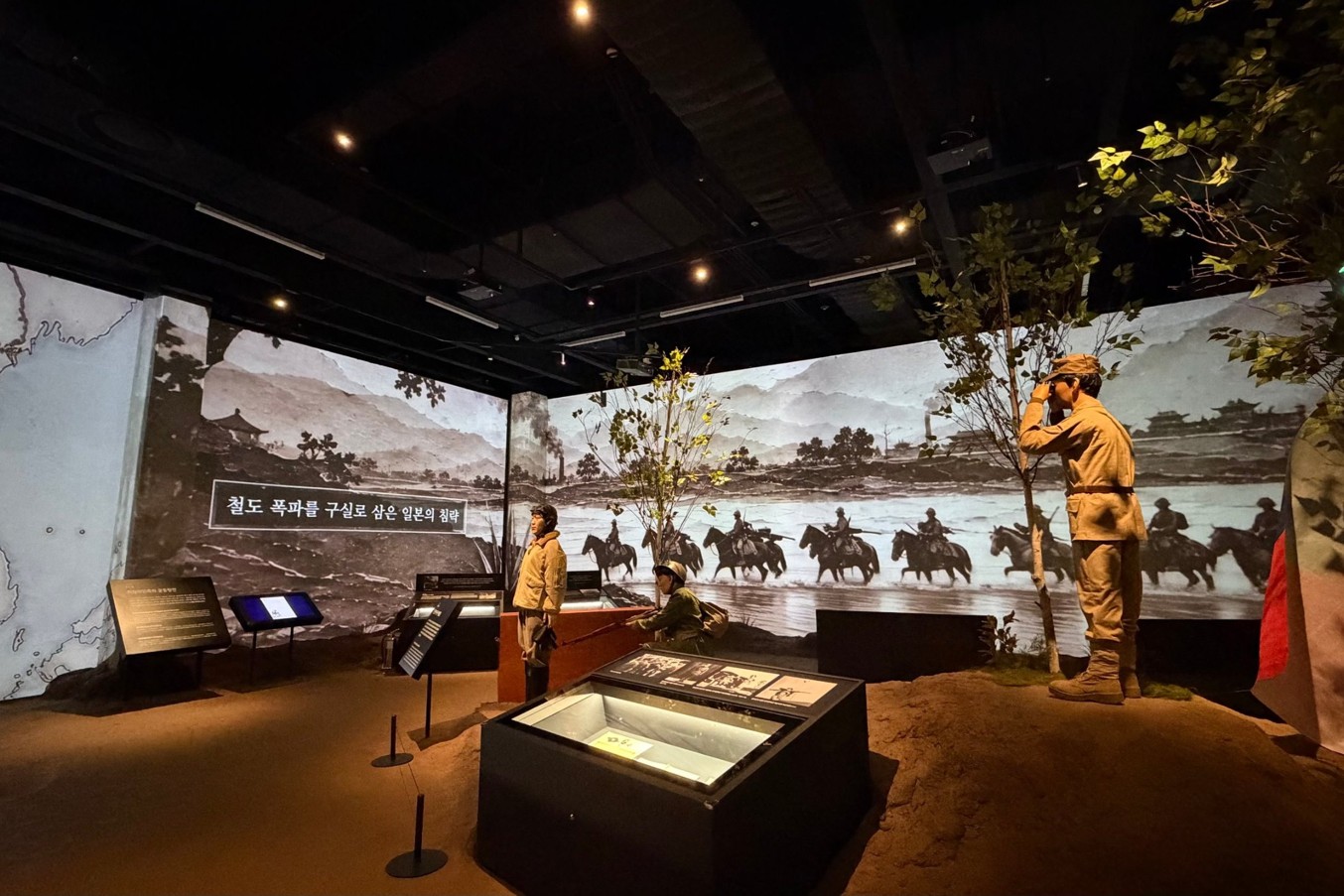
Equipped with a specialized 0.58:1 fixed short-throw lens, each Optoma GKU-DBTST unit can produce image sizes from 30 to 300 inches at minimal distance. Ceiling-mounted close to target surfaces, the steep projection angle ensures that visitor footpaths, display tables, and historical mannequins remain free of projection shadows, completely filling walls even within compact rooms.
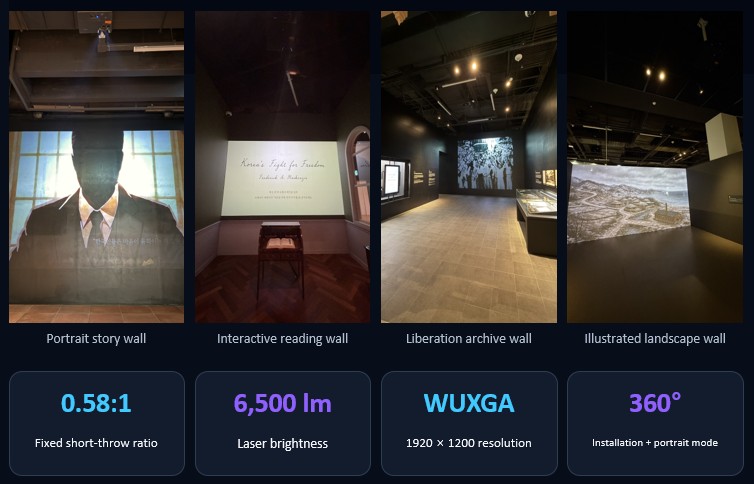


 [Installation Versatility: 360° Orientation, Portrait Mode & Advanced Blending]

The Optoma GKU-DBTST supports 360° flexible orientation, Portrait mode, optical lens shift, and ±15° horizontal/vertical keystone correction:

。Multi-Projector Blended Zones: Using edge blending and projection mapping, multi-projector arrays wrap seamlessly around walls and corners, forming expansive, wraparound battle scenes and historical cartographic routes.

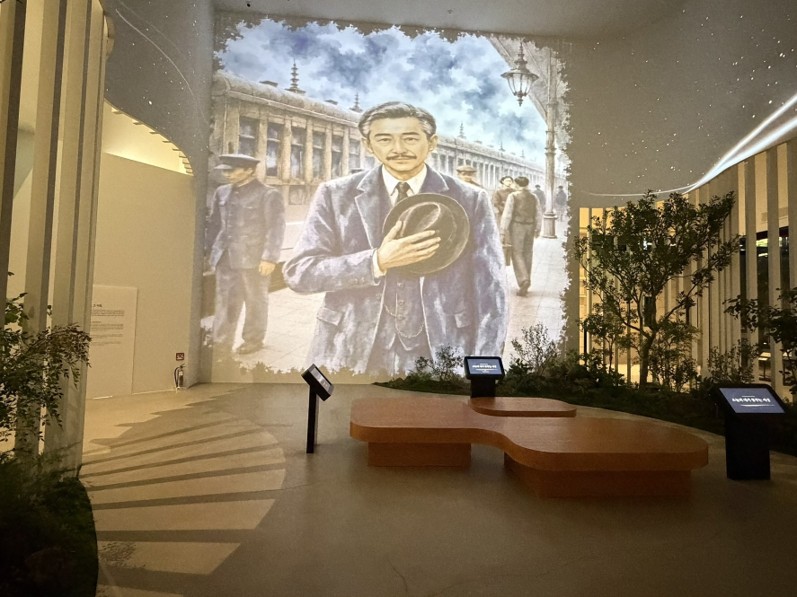
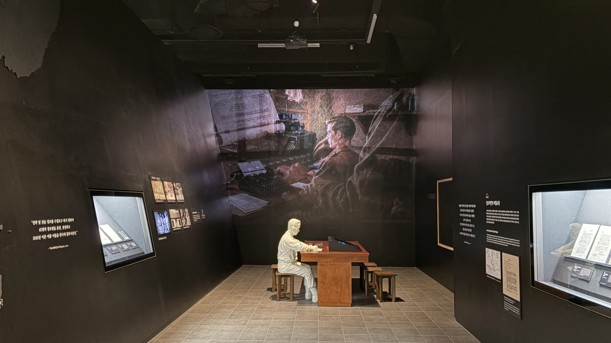
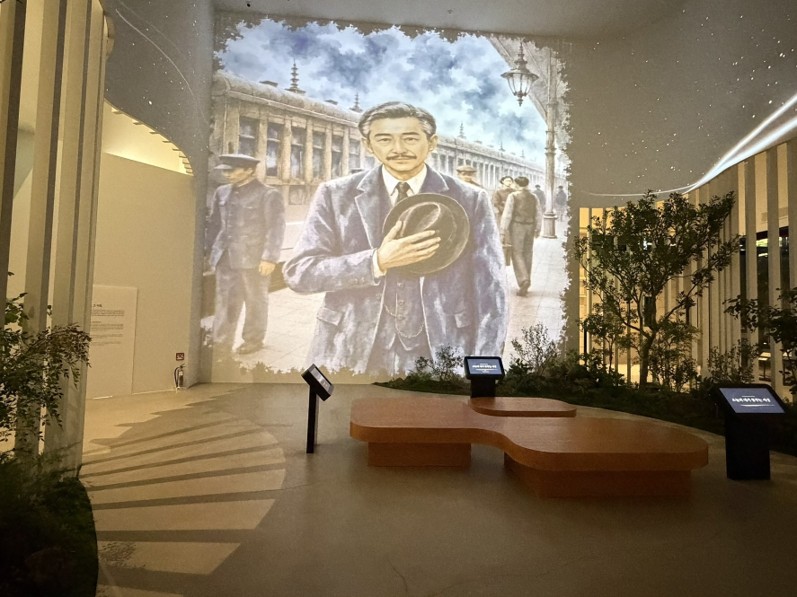
。Single-Projector Tailored Zones: Units were deployed individually across tailored feature zones, including the Portrait Story Wall, Interactive Reading Wall, Liberation Archive Wall, Illustrated Landscape Wall, Wartime Office Scene with Figure Display, and Archive Film Wall.   

Achievement

[Impactful Debut on National Liberation Day]

Premiering on August 15, 2026 (National Liberation Day), the exhibition immediately became the visual center of the 7th Exhibition Hall. The 22-projector network delivers an engaging journey through history, enabling roughly 1.8 million annual guests to experience the global solidarity behind Korea's independence.


[Seamless Synergy Between Physical Artifacts and Digital Media]

Optoma’s deep black levels, rich color rendition, and precise edge-blending capabilities blurred the boundary between physical heritage items (wax figures, reconstructed wartime offices, showcase archives) and dynamic projections. From fine archival typography to continuous wall-filling murals, every historical medium is displayed with clarity.


[High Client Satisfaction & Future Expansion]

The Independence Hall of Korea praised the Optoma GKU-DBTST for its installation versatility, optical performance, and stability across complex multi-projector configurations. Following the success of the 7th Exhibition Hall, the museum is evaluating further Optoma laser projector procurements to upgrade additional exhibition halls, establishing a strong benchmark for national cultural spaces. 


***

Client / End User: Independence Hall of Korea   

Distributor: DP Core Co., Ltd.

Display Technology Provider: Optoma Corporation